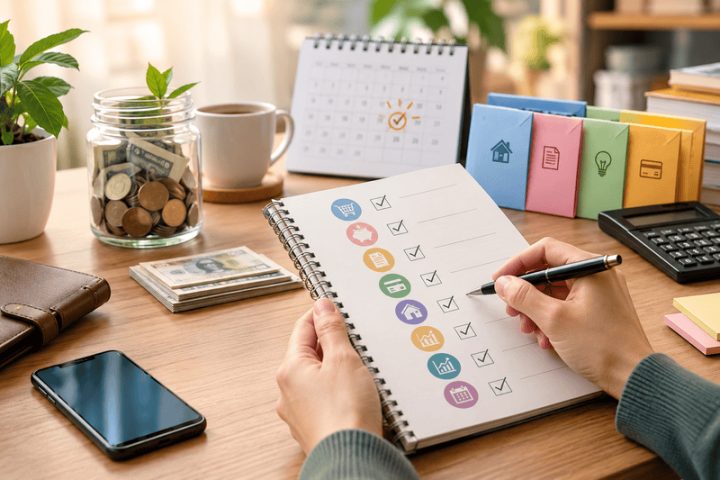
8 Small Financial Habits That Can Improve Your Finances
A healthy financial life depends more on daily habits than on a high income. Start adopting these eight small habits one at a time, and gradually bring your income and expenses under control. Most of our financial decisions are not conscious; they are driven by habits. The good news is that habits can be changed. You do not need to adopt all eight habits at once. Choose one, stick with it for two

In this article
- 1. Track Your Expenses Every Day
- 2. Set Aside Savings at the Beginning of the Month
- 3. Wait Before Making a Major Purchase
- 4. Review Your Finances Once a Week
- 5. Keep Track of Bill and Installment Due Dates
- 6. Shop with a List
- 7. Plan What to Do with Unexpected Money
- 8. Celebrate Your Progress
- Which Habit Should You Start With?
1. Track Your Expenses Every Day
Daily expense tracking is the foundation of all the other habits. When you record every expense, you naturally become more mindful of your spending. If you forget one day, simply pick up where you left off the next day and keep going.
2. Set Aside Savings at the Beginning of the Month
Do not leave saving until the end of the month. As soon as your salary arrives, set aside the amount you want to save and spend the rest.
3. Wait Before Making a Major Purchase
Build a waiting period into every non-essential purchase: one day for small purchases and one week for larger ones. During that time, consider how the purchase would affect your monthly budget.
4. Review Your Finances Once a Week
Ten minutes a week is enough to see how much you have spent and how much money you have left for the rest of the month. This habit helps prevent unpleasant surprises at the end of the month.
5. Keep Track of Bill and Installment Due Dates
Late fees are money lost for no good reason. Set reminders for loan installments, bills, and renewals so that nothing slips through the cracks.
6. Shop with a List
Shopping without a list usually leads to buying a few extra items. Make a list before heading to the store and stick to it.
7. Plan What to Do with Unexpected Money
Decide in advance how to divide bonuses, holiday money, or cash gifts. For example, put half into savings and use the other half for yourself. Without a plan, this money can disappear before you even realize it.
8. Celebrate Your Progress
Managing money should not be all about restrictions. When you finish a month without overspending or reach part of your financial goal, reward yourself with something small.
Good financial habits are like savings: they start small and make a big difference over time.
Which Habit Should You Start With?
If you want to choose just one, start by tracking your daily expenses. All the other habits can be built on this foundation.