Bills and subscriptions: find and manage your hidden monthly costs
Small recurring payments such as subscriptions and automatic renewals quietly take a big share of your salary. With a list of recurring payments, a due-date calendar and reminders, never pay late or for nothing.
In this article
Most of us know exactly what our rent is, but if asked how much we pay each month for subscriptions, top-ups and automatic renewals, we have no precise answer. Recurring payments are small and repeat quietly, which is why we do not notice them. Yet their total over a year is usually far more than we think.
What are recurring costs?
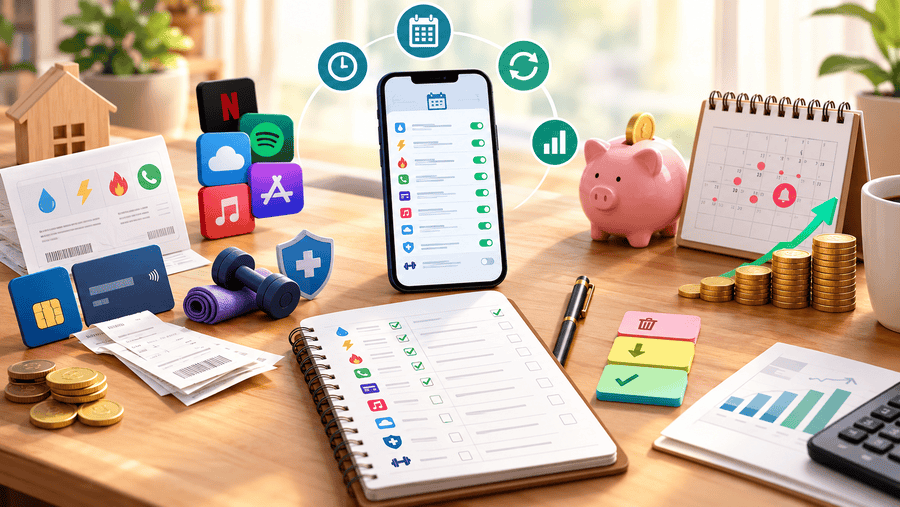
- Bills: water, electricity, gas, landline and local charges
- Instalments: bank loans, instalment purchases and monthly debts
- Subscriptions: film and music, cloud storage, apps and magazines
- Top-ups and fees: internet packages, mobile credit and building fees
- Insurance and memberships: supplementary insurance, gyms and associations
Step 1: Build a complete list of recurring payments
Go through the last three months of your account statements and write down every payment that appears more than once. Record this information for each one:
| Payment | Amount | Period | Due date | Essential? |
|---|---|---|---|---|
| Loan instalment | 3,000,000 | Monthly | 5th of each month | Yes |
| Home internet | 450,000 | Monthly | 10th of each month | Yes |
| Film subscription | 180,000 | Monthly | 20th of each month | Maybe |
| Cloud storage | 90,000 | Monthly | 1st of each month | Check |
| Gym | 1,200,000 | Quarterly | Start of season | Depends on use |
Step 2: Turn everything into a yearly cost
A simple trick to see the real size of recurring payments is to multiply them by twelve. Three subscriptions of 150,000 toman may look small, but they add up to 5,400,000 toman a year. Once you see the yearly figure, deciding whether to keep or cancel a subscription becomes easier.
Step 3: Cancel, reduce or keep
For every non-essential payment, make one of three decisions:
- Cancel: if you did not use it last month, cancel it. If you miss it, you can always reactivate it.
- Reduce: look at a cheaper plan, a shared family subscription or a discounted yearly payment.
- Keep: if you really use it and it is worth it, keep it with peace of mind.
A subscription you do not use is a monthly donation to a company.
Step 4: Build a due-date calendar with reminders
Late fees, service cut-offs and missed instalments are costs that create no value. Gather all due dates in one calendar and set a reminder one or two days early for each. If possible, move important due dates close to payday so payments happen before other spending.
Step 5: Review every three months
Subscriptions pile up again: a forgotten free trial, an automatic renewal or a new service. Every season spend ten minutes reviewing the list and checking new items.
Tips for seasonal bills
Gas bills rise in winter and electricity in summer. So these swings do not break your budget, calculate the yearly average of your bills and set aside the difference in low-use months. That reserve helps in high-use months.
Frequently asked questions
How do I manage free trials?
The moment you sign up, set a reminder for one day before the trial ends. If the service is not worth it, cancel before the first payment.
Is paying yearly better than monthly?
If you are sure you will use the service all year, a yearly payment is usually cheaper. If you are not sure, stay monthly for flexibility.
Summary
Recurring costs are small but their total is large. By building a complete list, seeing the yearly figure, cancelling unused services and setting reminders for due dates, you turn this hidden money into savings. In Polamo, set a repeating reminder for every bill and instalment; after the due time, Polamo asks how much you paid and records it directly in the month's expenses.